
Auditory Deprivation: What Happens When You Delay Hearing Aids?
Hearing loss often develops gradually, making it easy to ignore or postpone treatment. Many people assume that if they can still “get by,” there’s no urgency to act. However, delaying intervention can lead to a lesser-known but important consequence called Auditory Deprivation: a decline in the brain’s ability to process sound due to lack of stimulation. Understanding this process helps explain why early treatment with hearing aids is not just about improving hearing, but also about protecting long-term brain function.
What Is Auditory Deprivation?
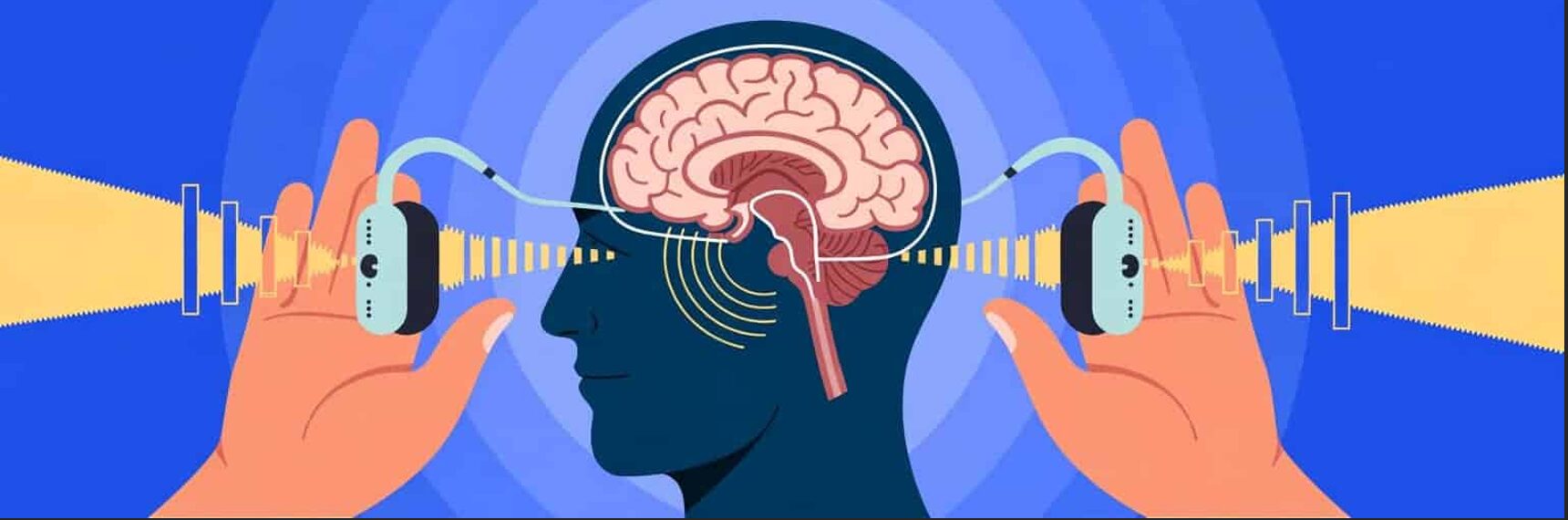
Auditory deprivation occurs when the brain receives reduced or incomplete sound input over time. When hearing loss is left untreated, certain sounds (especially subtle speech cues) are no longer clearly transmitted from the ears to the brain. As a result, the auditory pathways and processing centers begin to weaken.
A helpful way to think about this is to compare it to muscle use. When a muscle isn’t used regularly, it gradually loses strength. In much the same way, when the brain isn’t consistently exposed to a full range of sounds, its ability to interpret and make sense of those sounds begins to diminish.
How the Brain Is Affected
Hearing is not just an ear function; it is a brain function. While the ears capture sound, it is the brain that interprets and assigns meaning to what we hear. When sound input becomes limited, the brain is forced to work harder to fill in missing pieces. Over time, this added effort can reduce speech clarity, particularly in complex listening environments like restaurants or group conversations.
As auditory input continues to decline, sound discrimination becomes less precise, and everyday listening can feel increasingly effortful. Many people begin to notice a sense of fatigue after conversations, not because of volume, but because of the mental energy required to keep up. Even if hearing is later improved with devices, these changes in processing can persist if the deprivation has gone on for too long.
Why Delaying Hearing Aids Makes It Worse
Introducing hearing aids early helps maintain consistent stimulation of the auditory system, keeping neural pathways active and engaged. When that stimulation is delayed for years, the brain may gradually lose its ability to recognize and interpret certain sounds efficiently.
This is why some individuals who wait a long time before trying hearing aids report that amplified sounds feel unnatural or unclear at first. It’s not just about volume; the brain needs time to relearn how to process what it’s hearing. In these cases, the adjustment period can be longer, and outcomes may not be as strong as they would have been with earlier intervention. Hearing aids, therefore, play a dual role: they improve access to sound while also helping preserve the brain’s ability to understand it.
The Link to Cognitive Decline
There is increasing research linking untreated hearing loss with cognitive decline. While hearing loss itself does not directly cause conditions such as dementia, auditory deprivation may contribute to changes in brain function over time. Reduced auditory input means less overall stimulation for the brain, which can impact how efficiently it operates.
In addition, communication challenges often lead people to withdraw from social situations, reducing engagement and interaction. At the same time, the brain must allocate more effort to basic listening tasks, which can take resources away from memory and higher-level thinking processes. Addressing hearing loss earlier can help reduce these effects and support overall cognitive health.
Can Auditory Deprivation Be Reversed?
The brain is remarkably adaptable, and many people experience improvement once they begin using properly fitted hearing aids consistently. This process, often referred to as auditory retraining, reflects the brain’s ability to reorganize and strengthen its response to sound over time.
That said, the extent of recovery varies. Factors such as how long the hearing loss went untreated, its severity, and how consistently hearing aids are used all play a role. Participation in aural rehabilitation or structured listening exercises can further support progress. While improvement is certainly possible, earlier treatment provides the best opportunity to maintain strong auditory processing abilities.
Signs You Shouldn’t Ignore
If you’re unsure whether hearing loss is beginning to affect you, there are a few common signs worth paying attention to:
- Difficulty understanding speech in noisy environments
- Frequently asking others to repeat themselves
- Turning up the volume on televisions or devices
- Feeling mentally exhausted after conversations
These symptoms are often subtle at first, but they can signal the early stages of auditory deprivation.
The Bottom Line
Delaying hearing aids isn’t just about putting off better hearing, it can change how your brain processes sound over time. Auditory Deprivation highlights the importance of acting early, not only to improve communication but also to protect your cognitive function.
If you’ve noticed changes in your hearing, a comprehensive evaluation is a simple and important first step. Addressing hearing loss sooner rather than later can help preserve both your hearing ability and your brain’s capacity to interpret the sounds that shape your daily life.
Are you in the Forest Hill or Toronto area, and have questions or concerns about your hearing? Stop by Toronto Hearing Health Clinic, we would love to help!